
This hearty beef stew is a comforting dish perfect for chilly evenings. With tender chunks of beef, carrots, and potatoes simmered in a rich broth, it's a meal that warms you from the inside out. The blend of herbs and spices adds depth and flavor, making it a family favorite.
While most of the ingredients for this beef stew are commonly found in your pantry, you might need to pick up a few items at the supermarket. Make sure to get beef chuck for the best results, as it becomes tender and flavorful when cooked slowly. Tomato paste adds a rich umami flavor, and dried thyme and rosemary are essential for that classic stew taste.
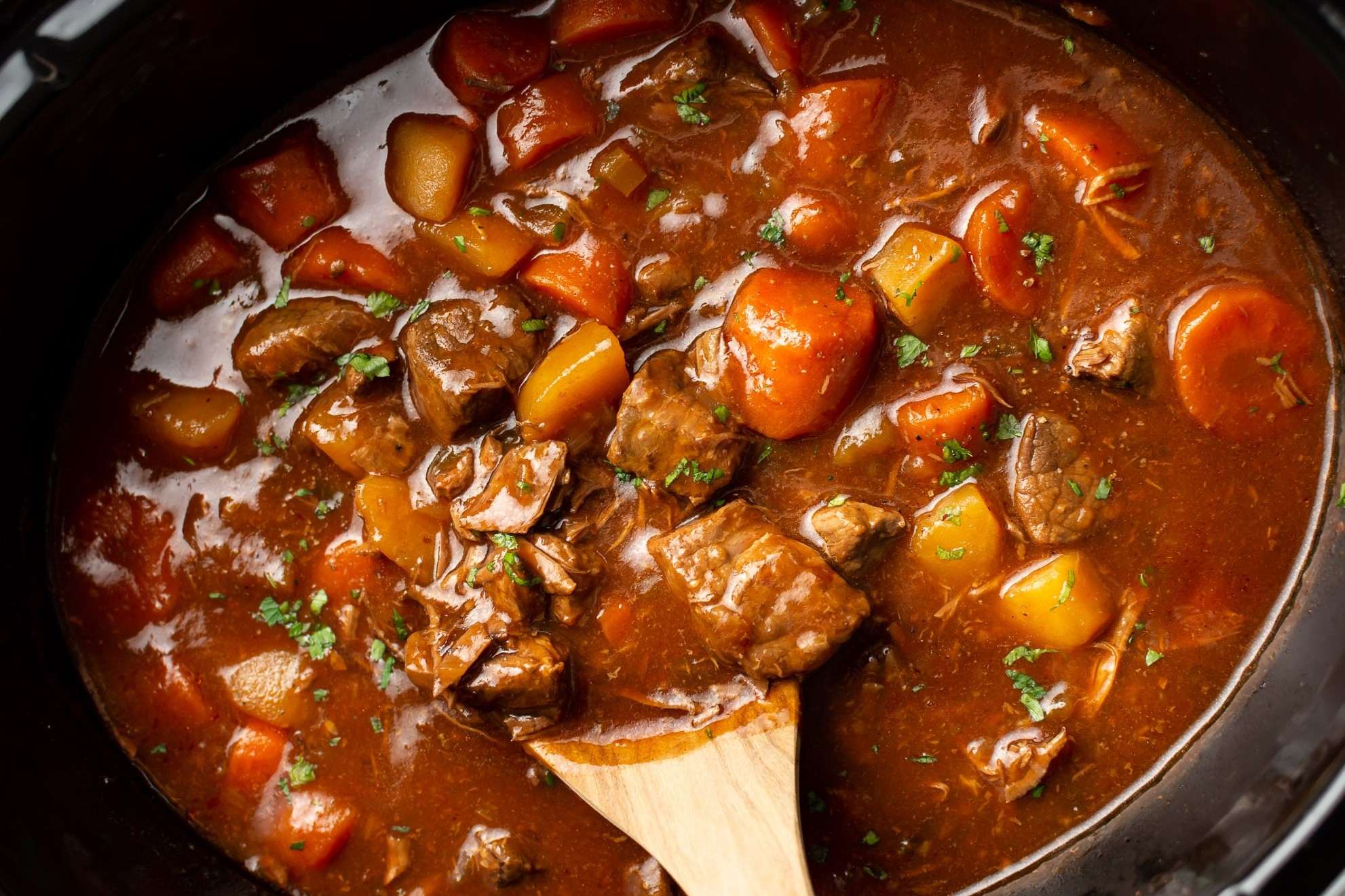
Ingredients For Beef Stew Recipe
Beef chuck: Cut into cubes, this cut of beef becomes tender and flavorful when cooked slowly.
Beef broth: Provides a rich, savory base for the stew.
Carrots: Sliced, they add sweetness and color to the stew.
Potatoes: Diced, they help to thicken the stew and add heartiness.
Onion: Chopped, it adds a depth of flavor and sweetness.
Garlic: Minced, it enhances the overall flavor of the stew.
Tomato paste: Adds a rich umami flavor and thickens the stew.
Salt: Enhances the flavors of all the ingredients.
Black pepper: Adds a bit of heat and depth to the stew.
Olive oil: Used for browning the beef and sautéing the vegetables.
Thyme: Dried, it adds a subtle earthy flavor.
Rosemary: Dried, it adds a fragrant, pine-like flavor.
Technique Tip for Making Stew
When browning the beef, make sure not to overcrowd the pot. Browning in batches ensures that the meat gets a nice sear, which adds depth of flavor to the stew.
Suggested Side Dishes
Alternative Ingredients
beef chuck - Substitute with lamb shoulder: Lamb shoulder has a similar texture and rich flavor, making it a good alternative for stews.
beef chuck - Substitute with pork shoulder: Pork shoulder is also well-marbled and becomes tender when slow-cooked, similar to beef chuck.
beef broth - Substitute with chicken broth: Chicken broth can provide a similar depth of flavor, though it will be slightly lighter.
beef broth - Substitute with vegetable broth: For a vegetarian option, vegetable broth can be used, though the flavor will be less robust.
carrots - Substitute with parsnips: Parsnips have a similar texture and sweetness, making them a good alternative to carrots.
carrots - Substitute with sweet potatoes: Sweet potatoes add a different kind of sweetness and a slightly different texture but work well in stews.
potatoes - Substitute with turnips: Turnips have a similar texture when cooked and add a slightly peppery flavor.
potatoes - Substitute with cauliflower: Cauliflower can be used for a lower-carb option, though it will have a different texture.
onion - Substitute with leeks: Leeks provide a similar flavor profile but are milder and slightly sweeter.
onion - Substitute with shallots: Shallots are smaller but have a similar flavor, though they are a bit sweeter and more delicate.
garlic - Substitute with garlic powder: Garlic powder can be used in place of fresh garlic, though it lacks the same intensity and freshness.
garlic - Substitute with shallots: Shallots can add a similar aromatic quality, though they are milder and sweeter.
tomato paste - Substitute with crushed tomatoes: Crushed tomatoes can provide a similar tomato flavor, though they will add more liquid to the stew.
tomato paste - Substitute with ketchup: Ketchup can be used in a pinch, though it will add sweetness and alter the flavor profile slightly.
salt - Substitute with soy sauce: Soy sauce can add a similar salty flavor along with a bit of umami.
salt - Substitute with celery salt: Celery salt can add a similar salty flavor with an additional hint of celery.
black pepper - Substitute with white pepper: White pepper provides a similar heat but is slightly more earthy and less pungent.
black pepper - Substitute with cayenne pepper: Cayenne pepper can add heat, though it is much spicier, so use sparingly.
olive oil - Substitute with canola oil: Canola oil has a similar cooking profile and is neutral in flavor.
olive oil - Substitute with butter: Butter can add a richer flavor, though it will change the texture slightly.
dried thyme - Substitute with dried oregano: Dried oregano has a similar earthy flavor and can be used in place of thyme.
dried thyme - Substitute with dried basil: Dried basil provides a different but complementary flavor to stews.
dried rosemary - Substitute with dried sage: Dried sage has a similar earthy and slightly piney flavor.
dried rosemary - Substitute with dried tarragon: Dried tarragon offers a slightly sweet and anise-like flavor that can complement the stew.
Alternative Recipes Similar to This Stew
How to Store or Freeze Your Stew
Allow the beef stew to cool completely before storing. This helps prevent condensation, which can lead to a watery stew and potential spoilage.
Transfer the cooled stew into airtight containers. For optimal storage, use containers that are the right size for your portions to minimize air exposure.
Label the containers with the date of preparation. This ensures you keep track of freshness and consume the stew within a safe timeframe.
Store the containers in the refrigerator if you plan to consume the beef stew within 3-4 days. The cold temperature will keep the ingredients fresh and flavorful.
For longer storage, place the airtight containers in the freezer. The beef stew can be frozen for up to 3 months without significant loss of quality.
When ready to enjoy, thaw the stew in the refrigerator overnight. This gradual thawing helps maintain the texture and flavor of the ingredients.
Reheat the beef stew on the stovetop over medium heat, stirring occasionally to ensure even heating. Alternatively, you can use a microwave, heating in short intervals and stirring in between to avoid uneven heating.
If the stew appears too thick after reheating, add a splash of beef broth or water to reach your desired consistency. Adjust the seasoning if necessary, as freezing can sometimes dull the flavors.
Enjoy your reheated beef stew with a fresh garnish of herbs or a side of crusty bread for a comforting and satisfying meal.
How to Reheat Leftovers
For stovetop reheating:
- Place the leftover beef stew in a pot.
- Add a splash of beef broth or water to maintain moisture.
- Heat over medium-low heat, stirring occasionally, until the stew is heated through, about 10-15 minutes.
For microwave reheating:
- Transfer the stew to a microwave-safe bowl.
- Cover with a microwave-safe lid or plastic wrap, leaving a small vent.
- Heat on medium power for 2-3 minutes, stirring halfway through.
- Continue heating in 1-minute intervals until the stew is hot.
For oven reheating:
- Preheat your oven to 350°F (175°C).
- Place the beef stew in an oven-safe dish.
- Cover with aluminum foil to prevent drying out.
- Heat for 20-30 minutes, or until the stew is thoroughly heated.
For slow cooker reheating:
- Transfer the stew to the slow cooker.
- Set to low heat.
- Heat for 1-2 hours, or until the stew is hot and ready to serve.
Essential Tools for Making Stew
Large pot: A large pot is essential for browning the beef and simmering the stew. It should be big enough to hold all the ingredients comfortably.
Wooden spoon: A wooden spoon is perfect for stirring the ingredients without scratching the pot.
Chef's knife: A chef's knife is needed for chopping the onions, mincing the garlic, and cutting the beef, carrots, and potatoes.
Cutting board: A cutting board provides a safe and clean surface for chopping and dicing the vegetables and meat.
Measuring spoons: Measuring spoons are used to measure out the tomato paste, salt, pepper, thyme, and rosemary accurately.
Measuring cups: Measuring cups are necessary for measuring the beef broth and ensuring the correct liquid-to-solid ratio in the stew.
Ladle: A ladle is useful for serving the stew once it is cooked.
Tongs: Tongs can be used to handle the beef cubes while browning them in the pot.
Peeler: A peeler is handy for peeling the carrots and potatoes before slicing and dicing them.
Garlic press: A garlic press can be used to mince the garlic cloves quickly and efficiently.
How to Save Time on Making This Stew
Pre-cut vegetables: Chop carrots, potatoes, and onions in advance and store them in the fridge.
Use a slow cooker: Combine all ingredients in a slow cooker and let it cook on low for 8 hours.
Batch cooking: Double the recipe and freeze half for a quick meal later.
Pre-marinade beef: Marinate the beef chuck overnight to enhance flavor and reduce prep time.
Instant pot: Use an Instant Pot to cut down cooking time significantly.
Beef Stew Recipe
Ingredients
Main Ingredients
- 2 lbs Beef Chuck cut into cubes
- 4 cups Beef Broth
- 2 Carrots sliced
- 4 Potatoes diced
- 1 Onion chopped
- 3 cloves Garlic minced
- 2 tablespoon Tomato Paste
- 1 teaspoon Salt to taste
- 1 teaspoon Black Pepper to taste
- 2 tablespoon Olive Oil
- 2 teaspoon Dried Thyme
- 2 teaspoon Dried Rosemary
Instructions
- 1. Heat olive oil in a large pot over medium heat. Add beef and cook until browned.
- 2. Add onions and garlic, cook until softened.
- 3. Stir in tomato paste, cook for another 2 minutes.
- 4. Add beef broth, carrots, potatoes, thyme, rosemary, salt, and pepper. Bring to a boil.
- 5. Reduce heat, cover, and simmer for 2 hours or until beef is tender.
Nutritional Value
Keywords
Suggested Appetizers and Desserts
More Amazing Recipes to Try 🙂
- Flapjack Pancakes Recipe30 Minutes
- Bean Salad Recipe15 Minutes
- Haldi Ka Doodh Recipe15 Minutes
- White Peachy Sangria Recipe15 Minutes
- Bologna Recipe30 Minutes
- Sweet and Sour Pork Recipe40 Minutes
- Ramen Noodle Soup Recipe30 Minutes
- Ahi Poke Recipe15 Minutes












Leave a Reply